
 English
 中文简体
 русский
 Français
 عربى
 Español
- Type:
- Industry News
- Date:
- 2026-Nov-13
As families look for more screen-free activities, children's board games and card games are receiving renewed attention from retailers and educational product distributors. Buyers are not simply looking for colorful cards that attract children's attention. They also need products that encourage interaction, support age-appropriate learning, and remain durable through repeated use. As a Childern Board Game Card Manufacturer, we understand that successful game products require a balance of creative design, practical functionality, material selection, and consistent production quality.
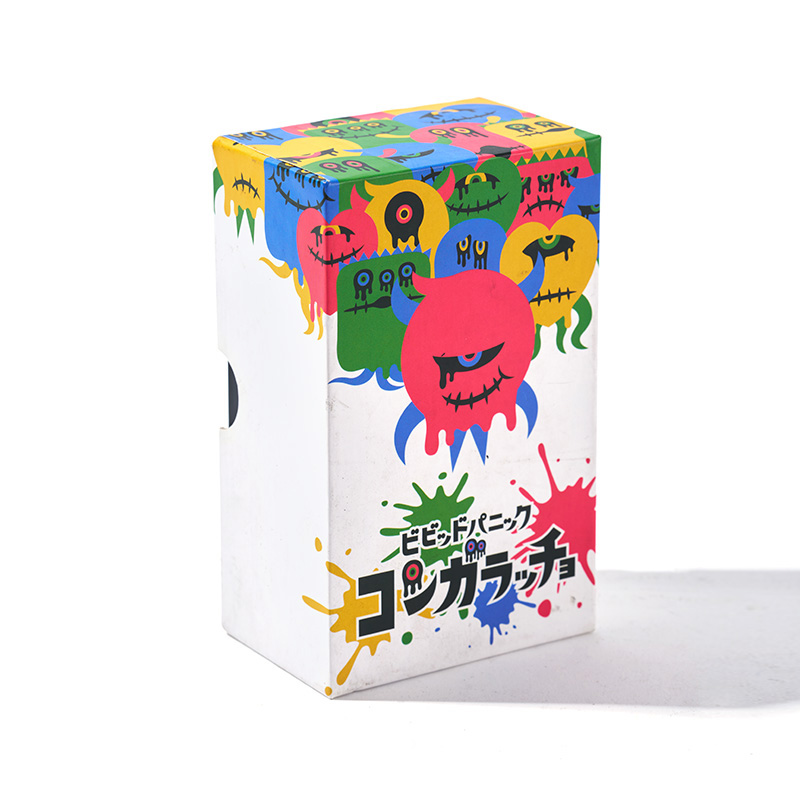
Screen-Free Play Creates New Product Opportunities
Many parents are becoming more interested in activities that bring children together without relying on digital devices. Card matching, memory challenges, storytelling games, and simple strategy-based activities offer convenient ways to keep children engaged at home, during family gatherings, or while traveling.
For wholesalers and toy retailers, this creates opportunities to develop different product collections around specific play experiences. Compact card games are particularly practical because they are easy to store, display, and distribute. Manufacturers should consider how game formats fit into everyday family activities rather than focusing entirely on appearance.
Age-Appropriate Card Design Matters
A game that works well for older children may be too complicated for younger players. Unclear instructions, excessive text, and complicated rules can quickly reduce interest.
When developing children's board game cards, we recommend considering:
- Visual recognition: Use clear illustrations, recognizable objects, and distinct colors to help younger players understand card content.
- Reading difficulty: Keep instructions and descriptions suitable for the intended age group.
- Game duration: Create play sessions that match children's attention spans.
- Interaction: Include matching, sorting, memory, or simple decision-making activities.
These details help buyers build product ranges for different age groups and retail channels.
Card Materials Influence Everyday Performance
Children frequently shuffle, bend, handle, and sometimes drop their game cards. Material selection therefore deserves attention during product development.
Paperboard thickness, surface coating, printing quality, and edge finishing all influence the final playing experience. A suitable coating can help reduce surface wear, while consistent cutting supports smooth handling and neat card alignment.
For manufacturers, material evaluation should take place before mass production. Buyers can also request physical samples to check card flexibility, surface feel, color consistency, and printing clarity before confirming an order.
Printing Quality Supports Product Recognition
Illustrations are an important part of children's games. If colors appear inconsistent or small graphic details become difficult to recognize, the playing experience can suffer.
Our production approach places attention on artwork preparation, color matching, printing registration, and cutting accuracy. Before production begins, buyers should confirm artwork files, card dimensions, color references, and packaging requirements.
This process helps reduce avoidable revisions and keeps the finished product closer to the approved sample.
Packaging Should Match the Sales Channel
Packaging affects storage, transportation, and shelf presentation. A compact tuck box may suit basic card games, while a rigid box with organized compartments may be more appropriate for a larger game collection.
For B2B buyers, several details deserve attention:
- Whether the box protects cards during transportation.
- Whether the packaging is convenient for retail display.
- Whether product instructions and age information are clearly presented.
- Whether the package dimensions support efficient storage and shipping.
These considerations are especially useful for distributors managing multiple game products.
Safety and Quality Checks During Manufacturing
Children's products require careful attention to material suitability and product safety. Buyers should identify the applicable requirements in their destination markets, including relevant toy safety standards and restrictions on chemical substances.
Production checks can cover incoming materials, printing quality, card dimensions, edge finishing, packaging assembly, and final product inspection. Where required, appropriate testing and supporting documentation should also be arranged.
A clear quality control process gives importers more confidence when evaluating suppliers and preparing products for market entry.
OEM and ODM Support for Different Market Needs
Different markets may prefer different themes, languages, game mechanics, and packaging styles. Flexible OEM and ODM cooperation allows buyers to develop products around their own retail positioning and customer requirements.
As a Childern Board Game Card Manufacturer, we focus on coordinating artwork, card specifications, material selection, printing, and packaging throughout the production process. By discussing product details before manufacturing, we help overseas buyers reduce communication gaps and prepare children's board game card collections that are suitable for their intended markets.