
 English
 中文简体
 русский
 Français
 عربى
 Español
- Type:
- Industry News
- Date:
- 2026-Oct-26
Custom Board Games are gaining attention from businesses looking for engaging promotional products, personalized gifts, and interactive entertainment. As families, friends, schools, and workplaces seek activities that encourage face-to-face communication, customized games offer a practical way to combine entertainment with a specific theme or brand message. For buyers, the challenge is turning an original idea into a game that looks appealing, plays smoothly, and remains practical to manufacture in batches.
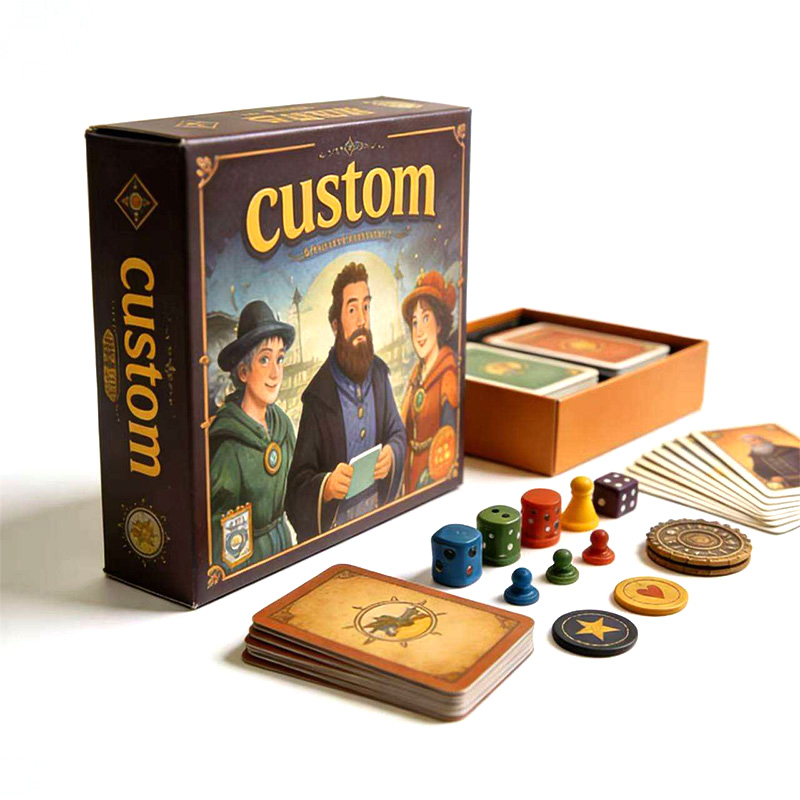
Personalization That Gives Players a Reason to Join
Players are drawn to games that reflect their interests, experiences, and everyday lives. Family trivia, company team-building challenges, educational activities, and themed party games each appeal to different audiences. When developing a custom product, we recommend defining the intended players before choosing the artwork or game format. A game for young children may need simple rules and large illustrations, while an adult strategy game can accommodate more detailed cards and layered mechanics. This early decision helps buyers avoid unnecessary revisions during production.
Choosing Materials for Regular Use
Board thickness, surface finish, card stock, and packaging all influence how a finished game feels. Products intended for frequent use need components that can withstand repeated handling, shuffling, and storage. A smooth card finish may support easier handling, while a sturdy folding board can help maintain its shape during transport. As a manufacturer, we encourage buyers to consider the complete playing experience rather than judging materials from appearance alone. Requesting physical samples before confirming a bulk order can help identify potential issues with durability and usability.
Artwork and Printing Need Practical Planning
Detailed illustrations and brand colors can make a game distinctive, but production files must also meet printing requirements. Blurry images, inconsistent colors, and text placed too close to cutting edges can affect the final result. Before mass production, buyers should check:
- Whether artwork files meet the required resolution and color specifications.
- Whether card layouts and board dimensions match the approved design.
- Whether small text remains readable after printing and cutting.
- Whether logos, instructions, and other visual elements are correctly positioned.
A clear pre-production review reduces avoidable corrections and helps maintain consistency across the finished set.
Game Rules Should Be Tested Before Manufacturing
An attractive design cannot compensate for confusing instructions or repetitive gameplay. We recommend testing a prototype with people who represent the intended audience. Observe whether players understand the objective, complete their turns without frequent explanations, and remain interested throughout the session. Feedback from these trials can reveal missing instructions, unbalanced rules, or components that are difficult to handle. Adjusting the game before approving production is generally more manageable than changing printed materials after manufacturing has begun.
Packaging Influences Shipping and Retail Display
Packaging needs to protect the components while fitting the product's sales channel. Retail games may benefit from clear product information and attractive shelf presentation, whereas corporate gifts may require customized sleeves, branded boxes, or inserts. Buyers should also consider the combined dimensions and weight of the packaged set when estimating shipping costs. Organizing cards, tokens, boards, and instructions efficiently can help control package size without compromising protection.
OEM and ODM Support for Different Business Needs
Different buyers require different levels of manufacturing support. Some arrive with complete artwork, tested rules, and packaging files, while others need assistance developing a concept into a production-ready product. Our manufacturing process can be planned around these requirements, including component selection, printing, assembly, and packaging coordination. Providing the expected order quantity, target market, preferred materials, and customization requirements early helps establish a clearer production plan and reduces misunderstandings during communication.
Turning a Game Concept Into a Market-Ready Product
Successful Custom Board Games combine enjoyable gameplay, thoughtful design, reliable materials, and packaging suited to the intended market. Whether developing educational products, branded corporate gifts, family entertainment, or retail collections, buyers can benefit from testing prototypes and reviewing production details before placing bulk orders. By working closely with a manufacturer from design preparation through final inspection, businesses can turn creative concepts into practical products that give players a reason to gather around the table.