
 English
 中文简体
中文简体 русский
 Français
 عربى
عربى Español
- Type:
- Industry News
- Date:
- 2026-Oct-02
A collectible card series often starts with a clear visual theme, character concept, or story setting. For blind box card products, each card needs to work as part of a larger collection while still having its own visual identity. This makes card planning an important part of product development.
A Blind Box Card Manufacturer can support projects involving character cards, collectible cards, trading cards, promotional cards, and other mystery card products. The production plan may include different card artworks, shared card backs, special card designs, and packaging elements. Each artwork needs to follow the same approved specifications so that the finished collection has a consistent appearance.
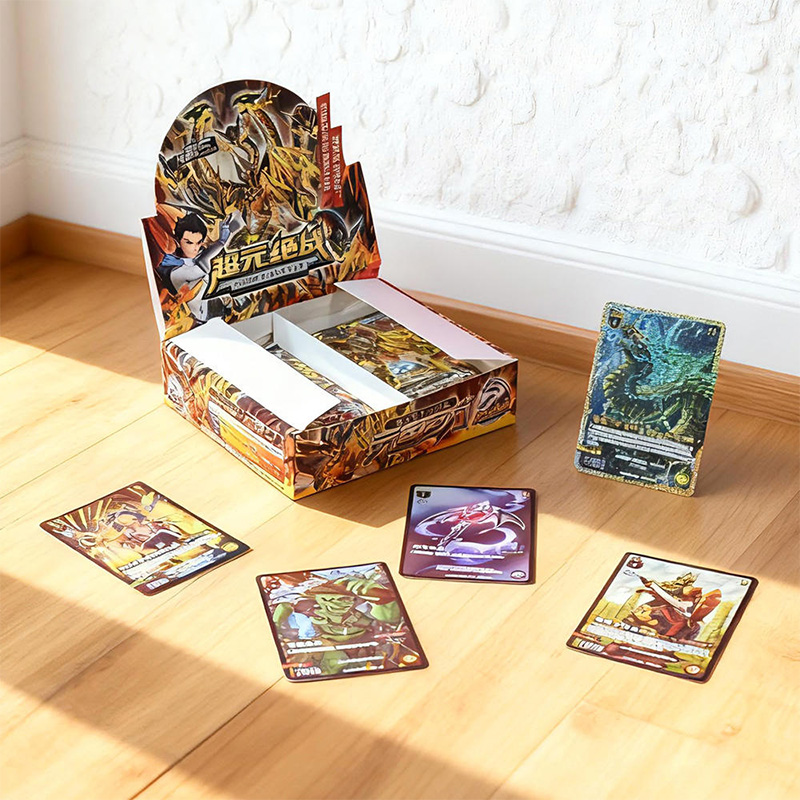
Card size, corner shape, layout, image placement, text position, and back design can all be defined during the preparation stage. If a collection contains several characters or themes, the design system can use common visual elements while allowing each card to have its own artwork.
The card series can also contain different categories. For example, a collection may include regular character cards, special artwork cards, event cards, or information cards. These categories can be organized during the artwork and production planning stages.
Card Materials and Printing Options
Card material affects stiffness, surface feel, printing performance, and handling. Different card projects may use coated paper, black core stock, specialty paper, or other card materials according to the desired product structure.
Printing quality is important when the artwork contains character illustrations, small text, gradients, or detailed backgrounds. CMYK printing can be used for full-color card designs, while special color requirements can be reviewed according to the artwork.
Surface finishing provides another way to create differences between card designs. Matte and gloss finishes can create different visual and tactile effects. Foil stamping, holographic effects, spot UV, embossing, and other finishing methods can also be considered for selected card designs. These processes can be applied to particular areas instead of the entire card when the artwork requires a controlled visual effect.
The card stock and finishing method should be reviewed together because the combination can affect readability, surface appearance, and production handling.
From Artwork Approval to Finished Card Series
Artwork preparation is an important stage before production begins. Each unique card design should have a clear file name and corresponding artwork information. Shared elements, variable elements, color requirements, and finishing areas should be identified before proofing.
A physical sample or approved proof can then be used to check the card appearance. This stage allows the design team to review color, text, image placement, card surface, corners, and finishing details before the full production process.
After printing, cards can go through cutting, corner rounding, surface finishing, sorting, and packing. When a series contains multiple designs, card sorting and collation need to follow the approved product structure. This helps keep the card collection organized during packaging.
The final packaging can then be matched with the card series. Depending on the product concept, cards may be packed individually or arranged into mystery packs. The relationship between artwork, card categories, sorting, and packaging should be confirmed as one complete production plan.