
 English
 中文简体
中文简体 русский
 Français
 عربى
عربى Español
- Type:
- Industry News
- Date:
- 2026-Oct-16
Custom Board Games involve several production elements, and each design decision can affect the manufacturing process and final quotation. A game with a simple board, cards, and basic tokens has different production requirements from a game containing custom-shaped pieces, multiple decks, special inserts, and complex packaging. Understanding these factors helps purchasers prepare a clearer product specification before contacting a manufacturer.
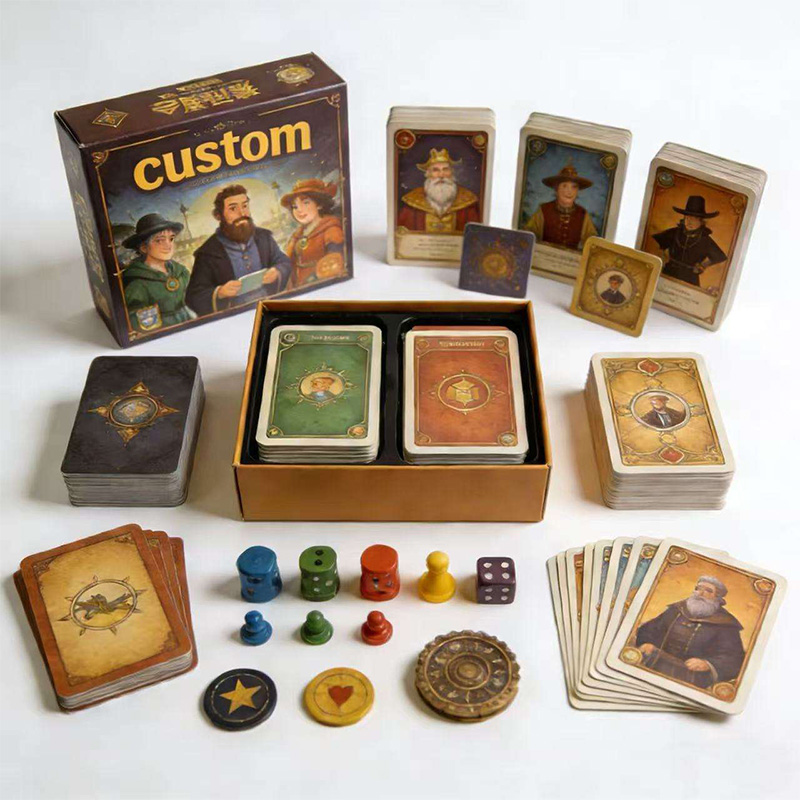
The size and structure of the game board are important considerations. A folding board may require a different construction process from a single-piece board. Board thickness, surface treatment, printing requirements, and folding structure can also influence material selection and processing. If the game includes a board with several sections or special shapes, additional production considerations may be required.
The number and type of components also affect manufacturing work. Cards, tokens, dice, pawns, counters, tiles, player boards, and other accessories each require their own production specifications. When a game contains many different components, production involves additional material preparation, printing, cutting, forming, inspection, and assembly work.
Packaging is another cost factor. A standard game box has different requirements from a rigid box with custom inserts and separate compartments. The packaging needs to protect the components while keeping them organized for storage and use. Purchasers should therefore consider the box structure and internal organization together with the game design.
How Design Choices Influence Manufacturing Costs
Artwork and printing requirements can have a direct effect on production work. Custom illustrations, game instructions, card graphics, board artwork, and packaging designs may all need to be prepared according to specific manufacturing requirements. The number of printed surfaces and the amount of artwork involved can influence production preparation.
Surface finishes can also change the manufacturing process. Depending on the desired appearance and handling requirements, customers may consider different paper finishes, coatings, laminations, or other treatments. A finish should be selected according to the intended use of the game rather than appearance alone.
Custom game pieces can introduce additional production requirements. Standard-shaped tokens may be easier to manufacture than components with unusual dimensions or detailed shapes. Custom dice, wooden pieces, plastic components, miniatures, and printed accessories may require separate tooling, molding, printing, or finishing processes.
Game complexity should also be considered during the design stage. A product containing many component types requires careful coordination between individual parts. Every component needs to fit the game rules, packaging structure, and assembly process. Clear specifications can help reduce changes during manufacturing.
Production Volume and Cost Planning
Order quantity is another factor that purchasers normally consider when planning a custom board game project. Production volume can affect material purchasing, setup work, assembly arrangements, and packaging requirements. Customers should therefore provide an expected order quantity when requesting a quotation.
Prototype production should also be included in the planning process. A prototype allows the physical structure, component dimensions, artwork, packaging, and game flow to be reviewed before batch manufacturing. Changes made during prototype development can help identify design issues before larger production begins.
Purchasers can also compare different component configurations during the quotation stage. For example, a game may use fewer component types while retaining the intended playing experience. Packaging can also be designed around the actual components to avoid unnecessary material use and assembly work.
A clear product specification gives manufacturers a better understanding of the project. Information about board dimensions, card requirements, component types, packaging, artwork, assembly, and expected order quantity can make communication more efficient and provide a clearer basis for production planning.